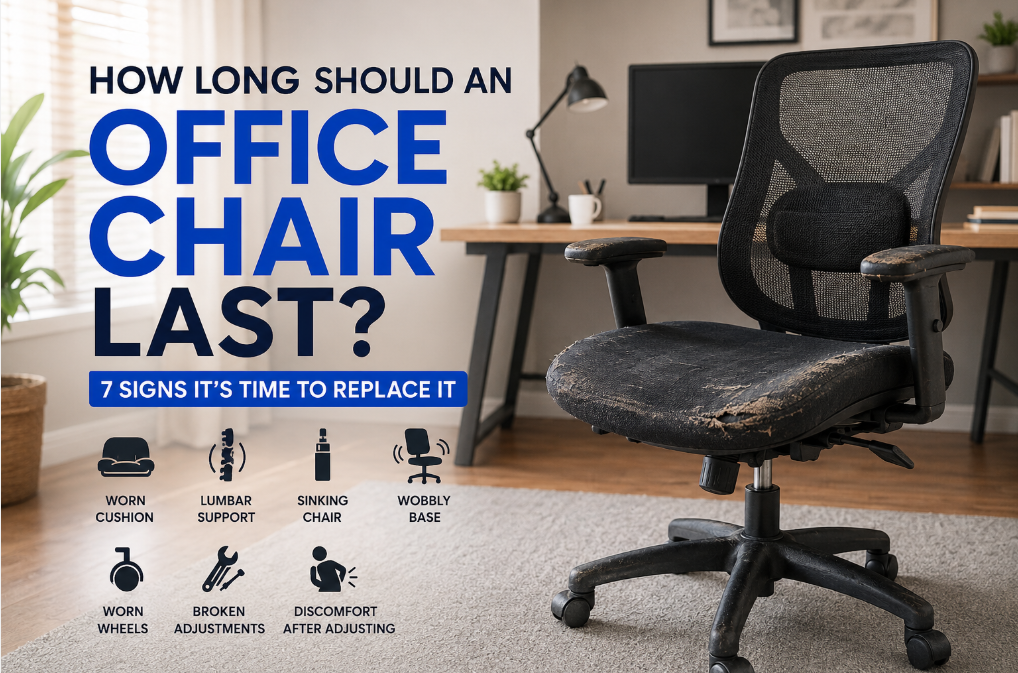
How Long Should an Office Chair Last? 7 Signs It’s Time to Replace It
A good office chair can make a noticeable difference in your daily comfort, especially if you spend several hours sitting at a desk.
But even a well-built chair does not last forever.
So, how long should an office chair last?
For many people, an office chair can remain usable for several years, but its actual lifespan depends on the chair’s construction, materials, usage, and maintenance. A chair used occasionally at home may last much longer than one used eight or more hours every day.
Instead of replacing your chair based only on its age, it is often more useful to look at its condition.
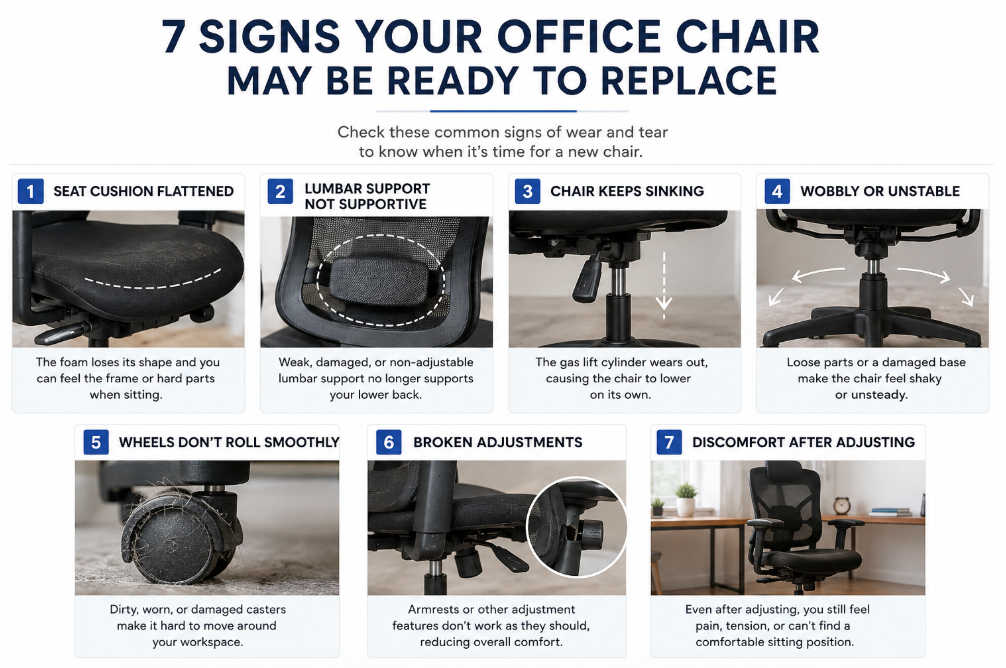
Here are seven signs that your office chair may be ready for replacement.
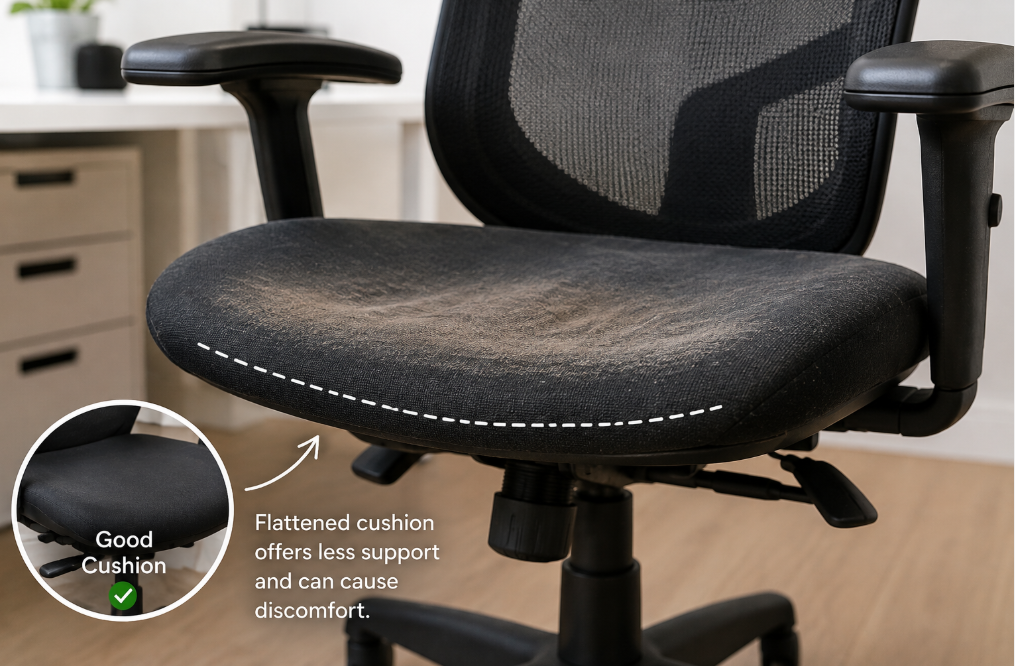
1. The Seat Cushion Has Permanently Flattened
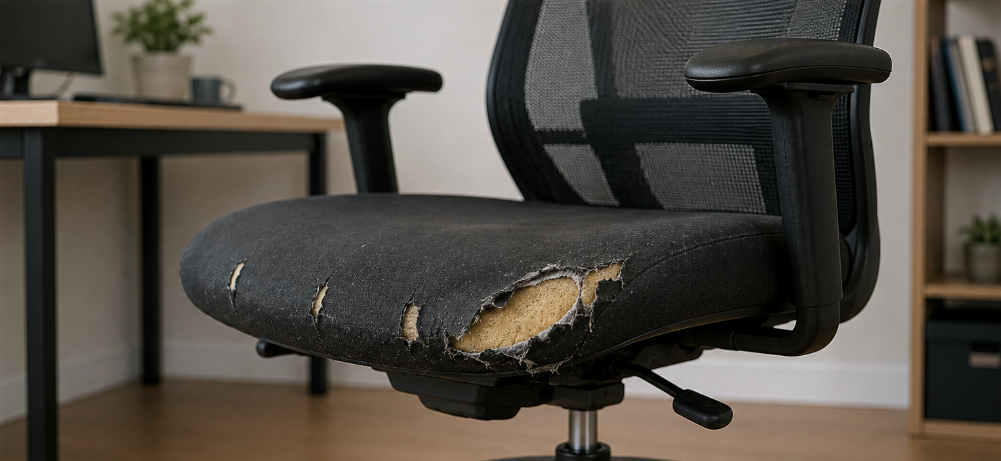
One of the easiest signs to notice is a worn-out seat cushion.
Over time, the foam inside the seat can lose its original shape and support. You may notice that the chair feels much harder than it used to, or that you can feel the frame underneath the cushion.
A slightly softer cushion is not necessarily a problem.
However, if you consistently feel uncomfortable after sitting for a short period, the loss of cushioning may be a sign that the chair is reaching the end of its useful life.
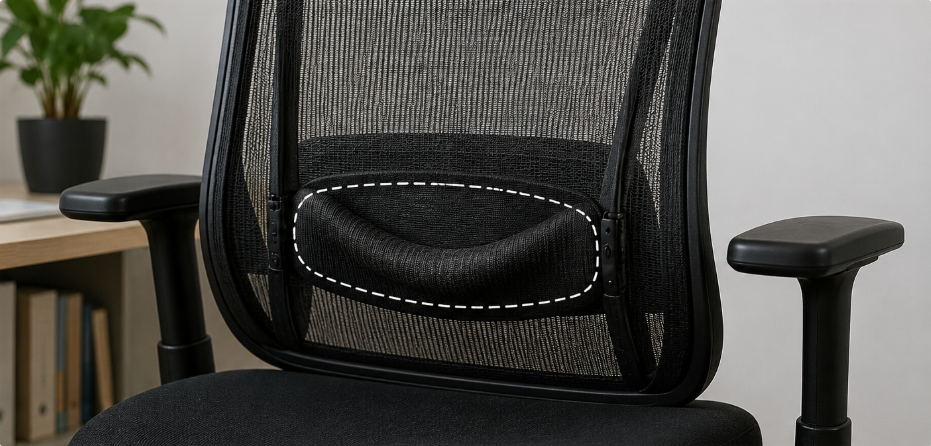
2. The Lumbar Support No Longer Feels Supportive
Lumbar support is designed to help support the lower back while you sit.
Depending on the chair, the lumbar support may be adjustable or built directly into the backrest.
If the lumbar area has become noticeably weaker, damaged, or difficult to adjust, the chair may no longer provide the level of support it originally did.
This is particularly important if you spend most of your workday sitting.
A chair does not necessarily need to be replaced simply because its lumbar support feels different. However, if the support mechanism is broken or the backrest has lost its shape, replacement may make more sense than continuing to use it.
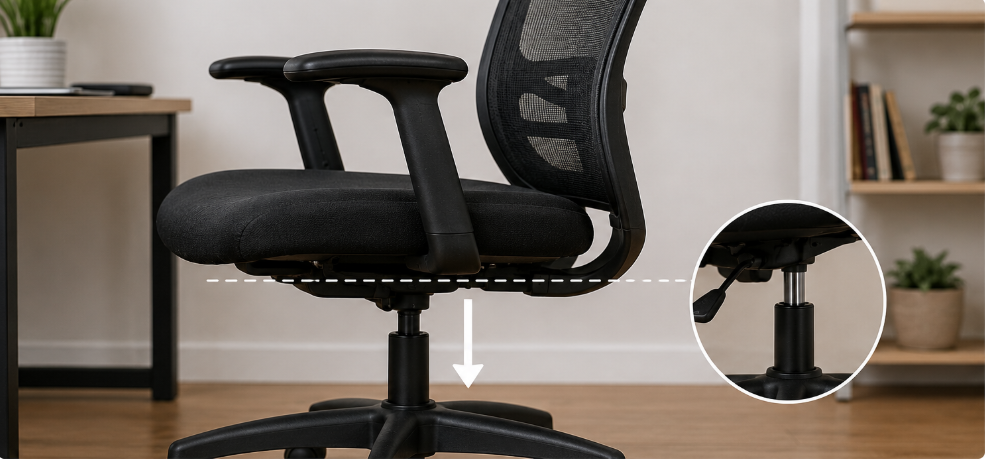
3. The Chair Keeps Sinking
Does your chair slowly lower itself while you are sitting?
This is a common sign of a problem with the gas lift cylinder.
You may initially notice only a small change in height. Over time, however, the chair may continue sinking until you have to readjust it repeatedly.
If the rest of the chair is still in excellent condition, replacing the gas lift may be possible.
But if the cylinder is failing along with the seat, wheels, and other components, replacing the entire chair may be the more practical option.
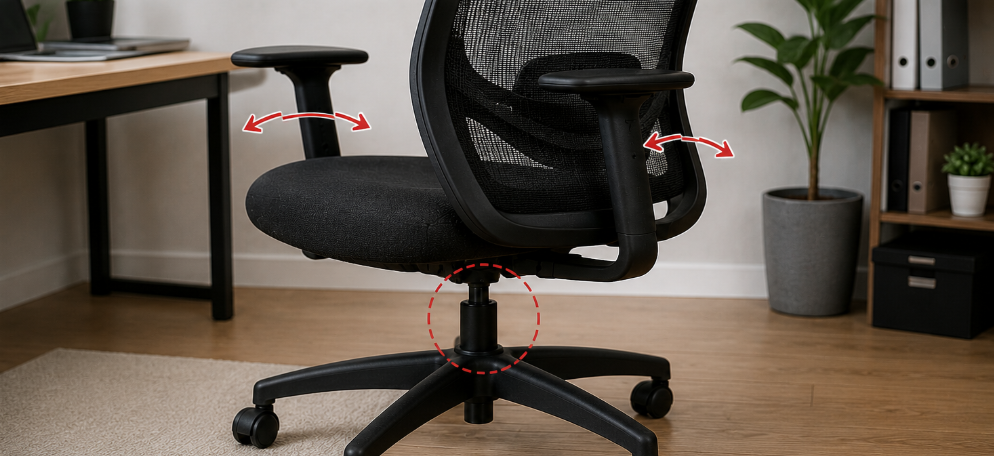
4. The Chair Wobbles or Feels Unstable
A small amount of movement is not necessarily unusual, but excessive wobbling should not be ignored.
Check the base, casters, screws, armrests, and other connections.
Sometimes the problem is simply a loose component that can be tightened or replaced.
If the chair continues to feel unstable after basic maintenance, however, it may indicate that the frame or base has deteriorated.
A stable chair is especially important when you use it for long periods every day.
5. The Wheels No Longer Roll Smoothly
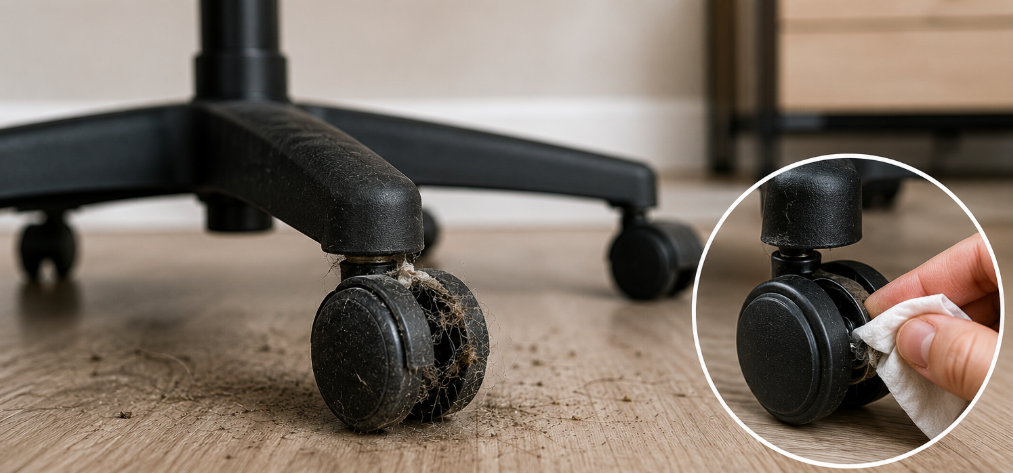
Office chair casters experience a surprising amount of wear.
Dust, hair, carpet fibers, and debris can accumulate around the wheels and make them difficult to move.
Before replacing the chair, clean the casters and check whether they are damaged.
Replacement casters are also widely available for many office chairs.
If the wheels are the only problem, replacing them can be much cheaper than buying a new chair.
However, if damaged casters are combined with a worn-out base or other structural problems, it may be time to consider a replacement.
6. The Armrests or Adjustment Mechanisms Are Broken
Modern ergonomic chairs often have several adjustment features.
Depending on the model, you may be able to adjust the:
- Seat height
- Backrest position
- Armrest height
- Armrest angle
- Recline tension
- Headrest position
- Lumbar support
These features are useful because everyone’s preferred sitting position is different.
When one or more adjustment mechanisms stop working, the chair can become much less comfortable.
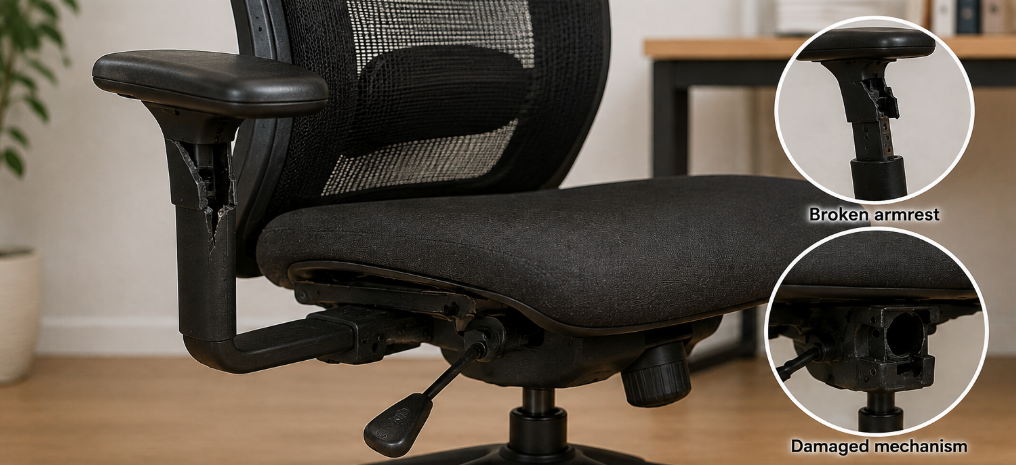
A broken armrest may be relatively easy to replace. A damaged internal mechanism, however, can be more difficult and expensive to repair.
If several adjustment features have stopped working at the same time, replacing the chair may be a better long-term choice.
7. You Feel Uncomfortable Even After Adjusting the Chair
This may be the most important sign of all.
A chair can look perfectly fine from the outside and still no longer work well for you.
Maybe your lower back feels unsupported.
Maybe your shoulders feel tense after working.
Maybe you constantly shift your position because you cannot find a comfortable sitting posture.
Before buying a new chair, check the basic setup.
Adjust the seat height so your feet can rest comfortably on the floor. Make sure the desk height works with your sitting position, and adjust the backrest and armrests if your chair allows it.
If you have tried reasonable adjustments and still cannot get comfortable, the chair may simply no longer fit your needs.
So, How Long Should an Office Chair Last?
There is no single expiration date for every office chair.
A chair used occasionally in a home office can potentially remain usable for many years, while a chair used heavily every day may experience noticeable wear much sooner.
Instead of focusing only on the number of years you have owned the chair, consider these factors:
- How many hours you use it each day
- The quality of the frame and materials
- The condition of the seat cushion
- The condition of the casters and base
- Whether the adjustment mechanisms still work
- Whether the lumbar and back support remain comfortable
- Whether the chair still feels stable
If most of these areas are still working well, there may be no reason to replace the chair simply because it is several years old.
On the other hand, a relatively new chair may need replacement if important components have already failed.
Should You Repair or Replace Your Office Chair?
Before buying a new chair, consider whether the problem can be fixed easily.
Usually worth repairing
- Dirty or damaged casters
- Loose screws
- Replaceable armrests
- Worn-out wheels
- A damaged gas lift cylinder
Replacement may make more sense
- Cracked or damaged frame
- Severely flattened seat
- Multiple broken adjustment mechanisms
- Unstable base
- Significant damage to the backrest
- Persistent discomfort despite proper adjustment
The cost of replacement parts is also worth considering.
If a simple $20–$50 repair can restore an otherwise comfortable chair, replacing the entire chair may not make financial sense.
But if several components are failing at once, a new chair can provide better value in the long run.
What Should You Look for in a New Office Chair?
If you decide that it is time for a replacement, don’t focus only on appearance.
For everyday office use, consider features such as:
Adjustable seat height
The chair should allow you to find a comfortable sitting height relative to your desk.
Good lumbar support
Look for a backrest that provides comfortable support without forcing your lower back into an unnatural position.
Adjustable armrests
Adjustable armrests can help you find a more comfortable position for your shoulders and arms.
Comfortable seat
A seat should provide enough support without creating uncomfortable pressure points.
Stable base and smooth casters
A strong five-point base and reliable casters can improve both stability and everyday usability.
Useful adjustment options
More adjustments are not automatically better. The important thing is whether the adjustments are useful and easy to operate.
Final Thoughts
So, how long should an office chair last?
There is no universal number.
A better approach is to evaluate the condition of the chair and how well it still supports your everyday work.
If the seat is worn out, the lumbar support has deteriorated, the chair keeps sinking, or several adjustment mechanisms no longer work, it may be time to replace it.
If the problem is limited to something simple like dirty wheels or a loose component, repairing the chair may be the better option.
The goal is not to replace your office chair as soon as it gets old.
The goal is to recognize when it is no longer providing the comfort, stability, and support you need.
If you’re looking for a replacement, check out our guide to the Best Office Chairs Under $300 to compare some affordable options for home and office use.