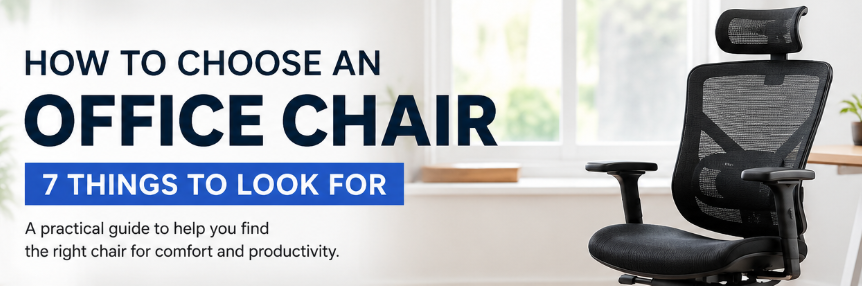
How to Choose an Office Chair: 7 Things to Look For
Choosing an office chair can be harder than it looks. With hundreds of models available at different price points, it is easy to focus on appearance or price while overlooking the features that actually affect everyday comfort.
The right office chair should support your body, fit your workspace, and allow you to adjust your sitting position throughout the day.
In this guide, we’ll explain how to choose an office chair by looking at seven important features, from lumbar support and seat height to armrests, recline, and overall adjustability.
What to Look For in an Office Chair
Before choosing a specific model, it helps to understand which features actually matter. A good office chair does not necessarily need every premium feature, but it should allow you to maintain a comfortable and supported working position.
Here are seven things to consider when comparing office chairs.
Start With Lumbar Support
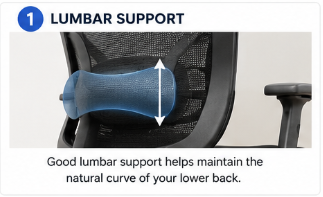
Lumbar support is one of the most important features to consider when choosing an office chair.
The lower back naturally has an inward curve, so a chair with appropriate lumbar support can help support that area while you are sitting.
Look for a chair with adjustable lumbar support if possible. Being able to change the height or position of the support can make it easier to find a comfortable setup based on your body and preferred sitting position.
Some chairs use a built-in lumbar pad, while others use flexible mesh or dynamic support systems that move with your body.
The important thing is not simply having a large lumbar cushion. The support should feel comfortable and allow you to sit naturally without forcing your lower back into an uncomfortable position.
Check the Seat Height
Seat height is another important factor that is sometimes overlooked.
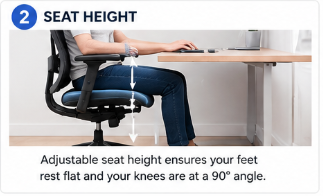
When your chair is adjusted correctly, your feet should be comfortably supported and your knees should not feel excessively raised or compressed against the underside of the desk.
A chair with adjustable seat height gives you more flexibility because desk heights and body proportions vary from person to person.
A simple way to check the fit is to sit normally and make sure your feet can rest comfortably while your legs have enough room underneath the desk.
If you need to raise your chair significantly to reach the desk comfortably, a footrest may also help maintain a more comfortable position.
Look for Adjustable Armrests
Armrests can make a significant difference during long periods of computer use.
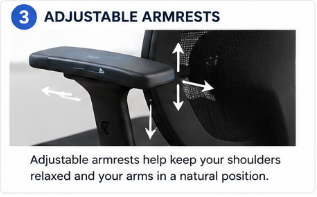
Adjustable armrests allow you to position your arms more comfortably instead of forcing your shoulders to stay raised or your elbows to move too far away from your body.
Depending on the chair, armrests may move up and down, forward and backward, or from side to side.
You do not necessarily need the most advanced 4D armrests. For many people, basic height adjustment is already useful.
When comparing chairs, consider whether the armrests allow you to keep your elbows relatively close to your body while using the keyboard and mouse.
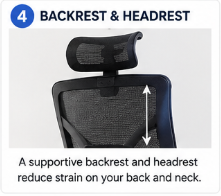
Consider the Backrest and Headrest
The backrest should provide enough support without restricting natural movement.
A taller backrest can be useful for people who prefer more upper-back support, while a more flexible backrest may be preferable if you frequently change your sitting position.
A headrest is more of a personal preference.
Some people enjoy having additional support when reclining, while others rarely use a headrest while working.
If you frequently lean back or take short breaks in your chair, an adjustable headrest may be worth considering.
However, do not choose a chair simply because it has a large headrest. The headrest should support your head and neck comfortably without pushing your head forward.
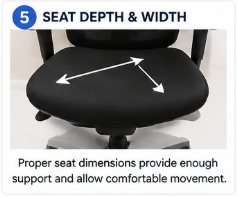
Check Seat Depth and Width
Seat dimensions are just as important as the chair’s overall appearance.
A seat that is too short may not provide enough support for your thighs, while a seat that is too deep can make it difficult to sit comfortably with your back against the backrest.
Seat width is also important, particularly for users who prefer more room to move.
If possible, check the seat dimensions before purchasing an office chair.
This is especially important when buying online because two chairs that look similar in product photos can feel very different when you actually sit in them.
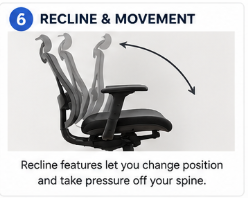
Consider Recline and Movement
A chair does not have to keep you completely upright all day.
Being able to recline can provide a useful change in posture, especially during breaks, reading, video calls, or other tasks that do not require you to lean toward the desk.
Look for a chair with a recline mechanism that feels smooth and stable.
Some chairs offer multiple locking positions, while others allow you to recline freely with adjustable resistance.
The best option depends on how you use your chair.
If you spend most of your day actively typing and working, basic recline functionality may be enough. If you frequently lean back or use your chair for extended periods, a more adjustable mechanism may be worth considering.
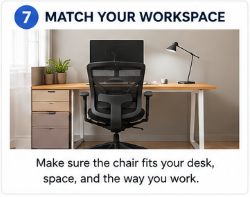
Match the Chair to Your Workspace
The best office chair on paper may not be the best chair for your actual workspace.
Before buying, consider the size of your desk, the available floor space, and how you normally use the chair.
For a small apartment or compact home office, a chair with flip-up armrests may be useful because it can slide closer to the desk when not in use.
For a larger workspace, you may have more flexibility when choosing a wider chair or a model with a larger base and more adjustment options.
Also consider the desk height. Even an adjustable chair may not work well if the desk itself is too high or too low for your preferred working position.
A chair and desk should be considered as a complete workstation rather than as two completely separate products.
How Much Should You Spend on an Office Chair?
Price is an important consideration, but spending more does not automatically mean getting a better chair.
Budget office chairs can provide useful features such as adjustable seat height, basic lumbar support, and breathable mesh.
Mid-range models may add better adjustment options, more supportive materials, adjustable armrests, or improved recline mechanisms.
Premium chairs often offer more sophisticated adjustment systems and higher-quality materials, but those features may not be necessary for everyone.
Instead of choosing a chair based only on price, compare the features that matter most for your daily use.
For example, someone who works eight hours a day may benefit more from good lumbar support and adjustability than from a premium-looking design.
What Makes a Good Office Chair?
A good office chair should fit your body and your workspace rather than simply having the longest feature list.
At a minimum, look for:
- Adjustable seat height
- Comfortable and supportive backrest
- Appropriate lumbar support
- Armrests that allow a natural arm position
- Enough seat width and depth
- A stable base and smooth movement
- Recline functionality that suits your working style
Adjustability is especially valuable because people naturally change positions throughout the day. OSHA’s computer workstation guidance also recommends adjustable furniture and workstation components that help users maintain neutral postures and reduce awkward positioning.
You can read more about workstation setup and ergonomics in the Occupational Safety and Health Administration’s Computer Workstations guide.
Final Thoughts
Learning how to choose an office chair is less about finding the chair with the most features and more about finding one that fits your body, workspace, and daily routine.
Start with the basics: lumbar support, seat height, seat dimensions, and a comfortable backrest. Then consider additional features such as adjustable armrests, headrests, and recline mechanisms based on how you actually use your chair.
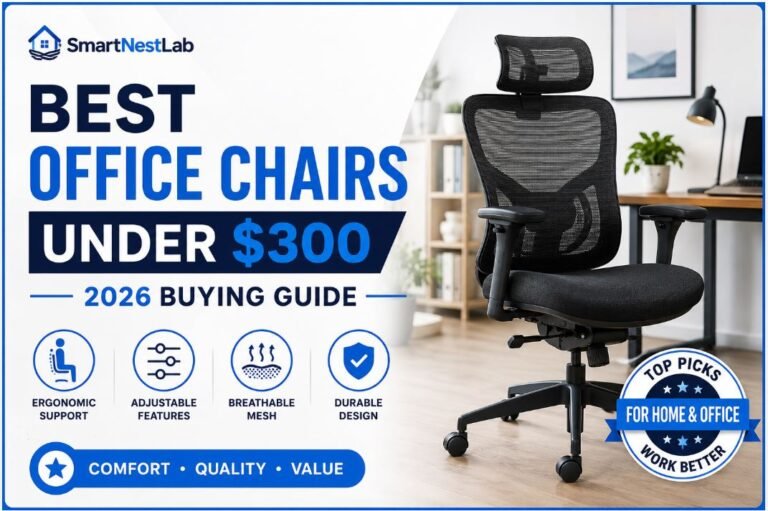
If you are shopping for a chair on a specific budget, our guide to the Best Office Chairs Under $300 compares several popular options and highlights the features that may matter most for different types of users.
The goal is simple: choose a chair that supports comfortable work without forcing you to spend money on features you do not actually need.