How to Set Up an Ergonomic Home Office: A Practical Guide
Working from home should be comfortable, but a poorly arranged workspace can quickly lead to neck tension, back discomfort, wrist strain, and tired eyes.
The good news is that creating an ergonomic home office doesn’t require expensive equipment or a complete room makeover. Small adjustments to your chair, desk, monitor, keyboard, and lighting can make a noticeable difference in how your workspace feels throughout the day.
In this guide, we’ll walk through the most important parts of an ergonomic home office setup and show you how to adjust your workspace before spending money on new equipment.
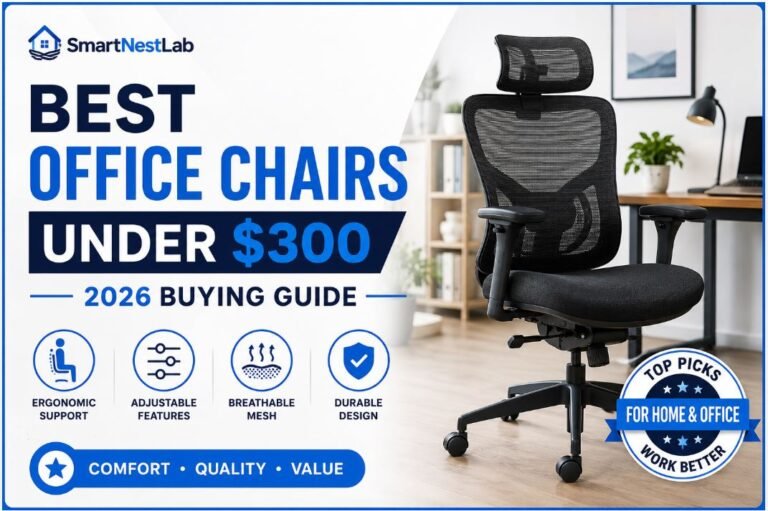
If you’re also looking for a new chair, you can check out our guide to the [Best Office Chairs Under $300].
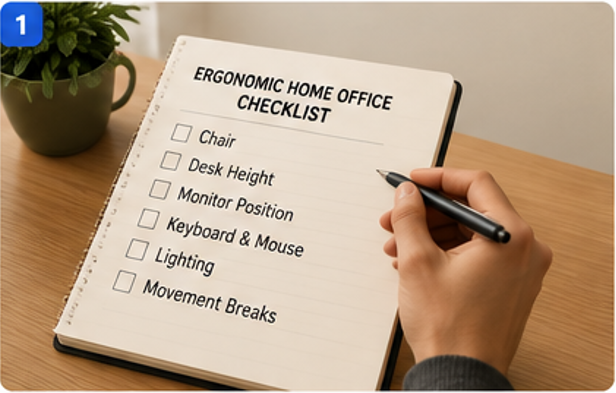
Quick Ergonomic Home Office Checklist
- Chair supports your lower back and allows your feet to rest comfortably
- Desk allows your elbows to stay close to your body
- Monitor is positioned around eye level
- Keyboard and mouse are within easy reach
- Screen is about an arm’s length away
- Workspace has enough lighting without excessive glare
- You can change your position and take regular movement breaks
Start With Your Office Chair
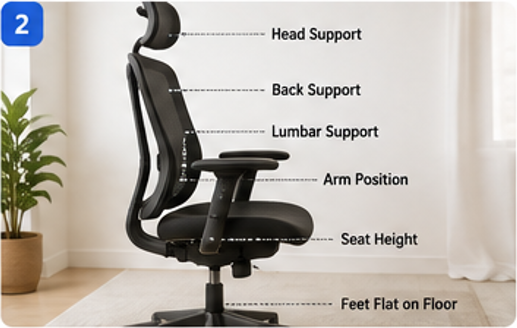
Your chair is one of the most important parts of an ergonomic home office because it supports you throughout most of the workday.
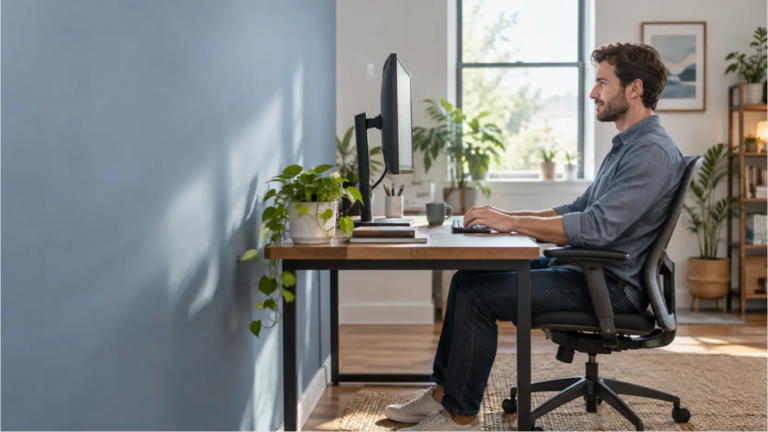
Start by adjusting the seat height so that your feet can rest comfortably on the floor. Your knees should remain in a comfortable position rather than being forced upward or left unsupported.
Your lower back should also have adequate support. If your chair has adjustable lumbar support, position it so that it supports your lower back without pushing you too far forward.
Don’t worry about finding one “perfect” sitting position. The goal is to create a comfortable starting position that allows you to change posture throughout the day.
Looking for a new ergonomic chair? See our guide to the [Best Office Chairs Under $300] for budget-friendly options.
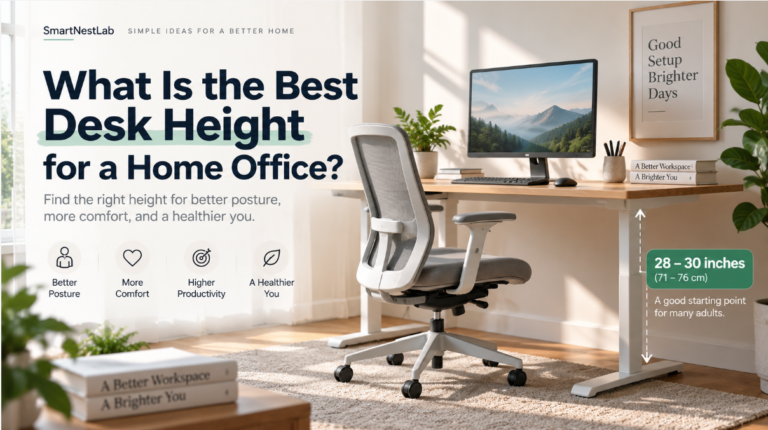
Set Your Desk at the Right Height
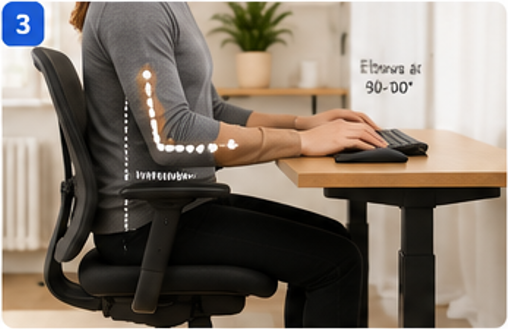
Your desk should allow you to work without raising your shoulders or reaching too far forward.
When you’re seated, try to keep your elbows close to your body and your shoulders relaxed while using your keyboard and mouse.
If your desk is too high and cannot be adjusted, raising your chair may help. However, make sure your feet still have proper support. A footrest can help if your feet no longer rest comfortably on the floor.
Also keep enough space underneath the desk for your knees, thighs, and feet.
If you are deciding whether an adjustable surface is worth it, compare the tradeoffs in our sitting vs standing desk guide.
Position Your Monitor Correctly
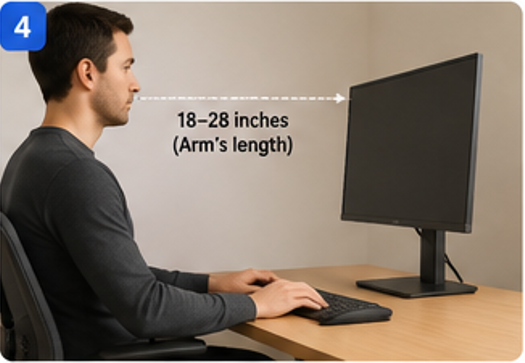
A monitor that’s too low can encourage you to constantly look downward, while a monitor that’s too far away can make text harder to read comfortably.
Start by placing your monitor directly in front of you. The screen should be roughly an arm’s length away, with the top of the display around eye level or slightly below.
If you use two monitors, place your primary monitor directly in front of you and position the secondary screen beside it.
For a step-by-step adjustment process, see our guide to how high your monitor should be, including tips for glasses, laptops, and dual screens.
Adjust Your Keyboard and Mouse
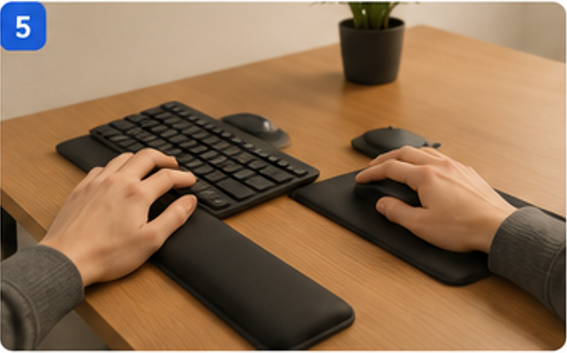
Your keyboard and mouse should be close enough that you don’t need to reach forward repeatedly.
Keep your shoulders relaxed and your elbows reasonably close to your body. Try to avoid working with your wrists bent sharply upward for long periods.
If you’re using a laptop as your primary computer, consider using an external keyboard and mouse when possible. This allows you to raise the screen without forcing your hands into an uncomfortable position.
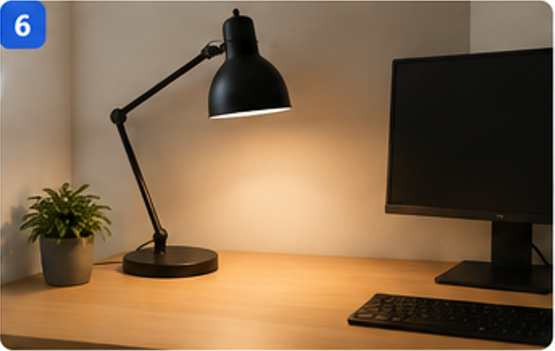
Improve Your Workspace Lighting
Good lighting is easy to overlook when setting up a home office.
Try to position your desk so that strong light sources aren’t directly reflected on your screen. Natural light can be helpful, but windows should ideally be positioned to minimize glare.
If your workspace is dim, add a desk lamp or other adjustable light source rather than relying only on the light from your monitor.
Keep Your Workspace Comfortable
Ergonomics isn’t only about your chair and monitor.
Keep frequently used items within easy reach so you don’t have to repeatedly twist or stretch across your desk.
Make sure there is enough room underneath your desk and avoid storing items where they interfere with your legs or feet.
A clean workspace can also make it easier to maintain a comfortable working position throughout the day.
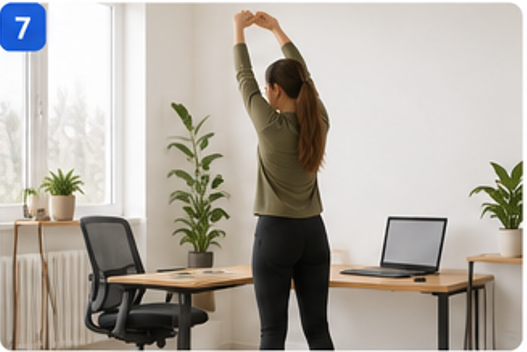
Don’t Forget to Move
Even a well-designed workstation isn’t a reason to stay in exactly the same position for hours.
Change your posture regularly, stand up when possible, and take short movement breaks throughout the workday.
The goal of an ergonomic workspace isn’t to force your body into one perfect position. It’s to make comfortable movement and posture changes easier.
Recommended Office Chairs
Your workspace setup doesn’t need to be expensive, but a supportive office chair can make a meaningful difference if you spend several hours at your desk each day.
If you’re ready to upgrade your chair, we’ve compared several budget-friendly options in our guide:
Final Thoughts
Setting up an ergonomic home office doesn’t have to mean buying expensive equipment.
Start with the basics: adjust your chair, position your desk comfortably, raise your monitor to an appropriate height, keep your keyboard and mouse within easy reach, and reduce unnecessary glare.
Once those basics are in place, you can gradually upgrade your workspace based on your needs and budget.
A good ergonomic setup should make your workday more comfortable without making your workspace unnecessarily complicated.
Frequently Asked Questions
What is the most important part of an ergonomic home office?
Your chair, desk height, and monitor position are some of the most important starting points. Focus on adjusting your existing equipment before buying new products.
How far should my monitor be from my eyes?
A good starting point is roughly an arm’s length away. Adjust the distance based on screen size and text readability.
Should my monitor be above or below eye level?
The top of the monitor should generally be around eye level or slightly below. This helps avoid constantly looking downward while working.
Do I need an expensive ergonomic chair?
Not necessarily. A chair with appropriate height adjustment, comfortable support, and a suitable fit can be more useful than simply choosing the most expensive model.
For additional guidance on creating a safe and comfortable computer workstation, you can refer to the Occupational Safety and Health Administration (OSHA) Computer Workstations guide.